
AI Alert Triage for Engineering Teams
Lightrun AI SRE identifies the responsible service and owner, and send alerts
with full impact and execution context attached.
Replace noisy alerts
with confident decisions
The correct team gets an impact analysis of each alert, from telemetry, codebase,
and infrastructure data.
Confirm the full
incident impact
Distinguish critical issues from alert noise by correlating logs, metrics, and traces across affected services.
Identify the
responsible service
Pinpoint the service and execution path associated with the failure, separating root cause from downstream impact.
Route alerts
with escalation context
Notify teams with evidence, recent change, impacted dependencies, and blast radius to ensure efficient handling.
How Lightrun triages alerts
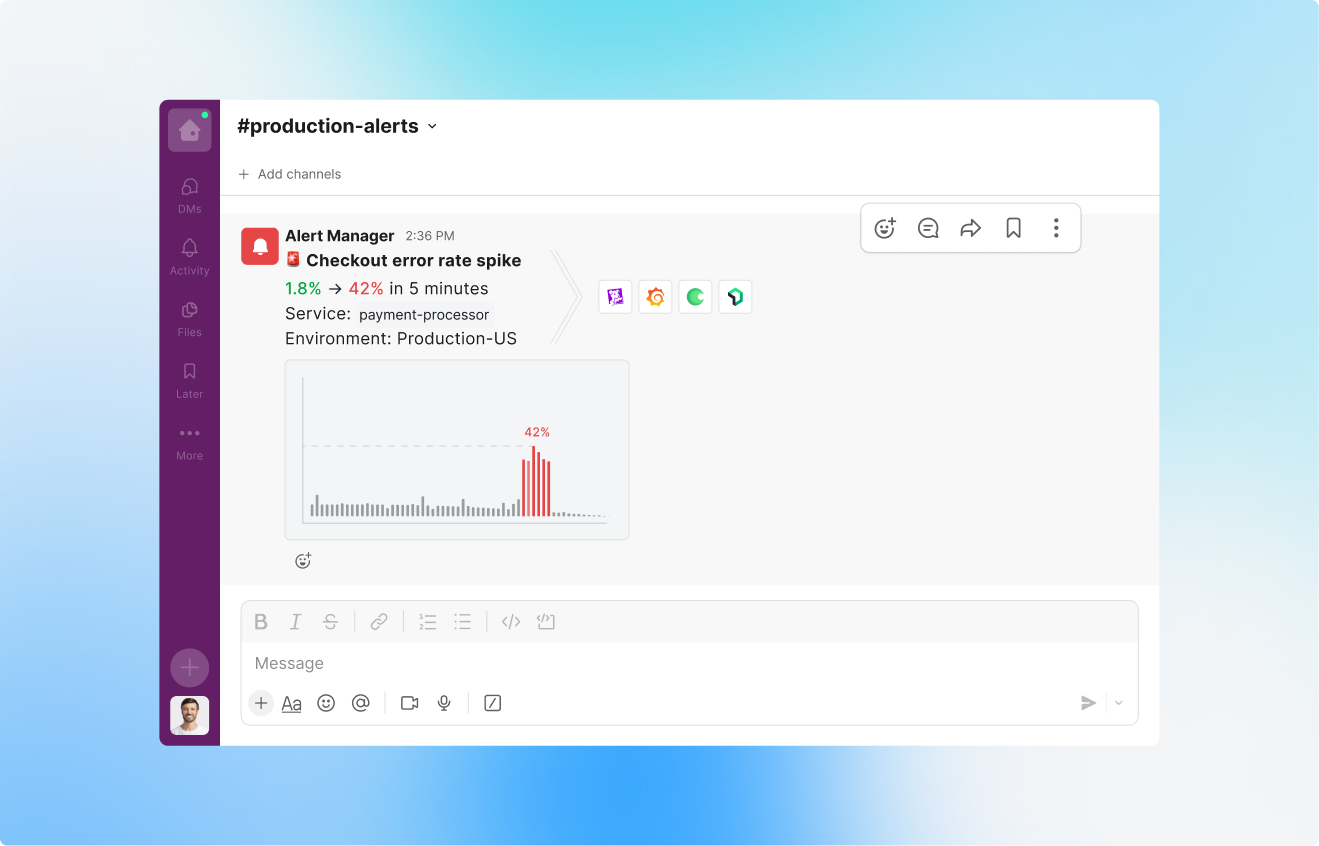
Lightrun analyzes the alert, captures live execution at the failure point,
and determines ownership and downstream impact before routing.
Ingest alerts from
existing systems
Connects directly with your monitoring, APM, and incident tools without replacing your stack, matching new alerts to live system data.
Capture runtime evidence
at the failure point
Inserts dynamic, read-only instrumentation to inspect the exact line, variable, and dependency to find what triggeded the alert without redeploying.

Identify ownership
and blast radius
Traces how the request moved through services to determine responsible teams and downstream impact.

Why Lightrun triage is different
Evidence, not assumptions
Each decision is grounded in live runtime evidence, not static logs.
Explainable alert assignments
Every escalation includes the reasoning for assignment, severity, and impact.
Less noise, faster response
Filter incidents and prioritize based on real impact.
No vendor lock-in.
Works across your stack.
With 100+ integrations and native agents for JVM, Node.js, Python, and Go, Lightrun augments your monitoring and incident systems with runtime context.


